Aave (AAVE) – Rapport de recherche
 Écrit par Tristan Goutte
Écrit par Tristan Goutte
Écrit par Tristan Goutte
Crypto Assets Management – Mereau Finance
Entreprise enregistrée en tant que PSAN auprès de l’AMF sous le numéro E2023-084
RCS de Nanterre : 894 424 902
Adresse : 35 rue Jean Jaurès, 92800 Puteaux
Date : 29 avril 2025
Nous avons à cœur de vous accompagner humainement dans votre investissement en actifs numériques sur le long terme. Dans cette classe d’actifs volatile et risquée, une approche sereine et durable est essentielle.
« Les actifs numériques sont au transfert et au stockage de valeur ce qu’Internet a été au transfert et au stockage de l’information. »
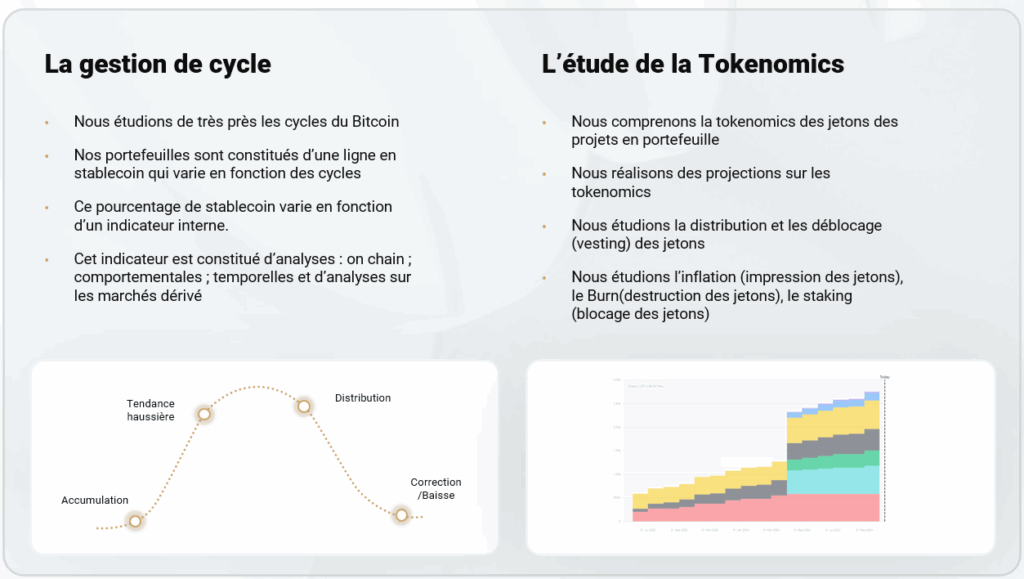
Notre approche d’investissement repose sur l’identification de projets à forte efficience et aux fondamentaux solides. Nous analysons minutieusement leurs tokenomics pour repérer d’éventuelles anomalies de marché. Notre sélection se concentre sur les projets du top 200 par capitalisation, avec une vision moyen-long terme, couvrant divers secteurs de l’écosystème crypto.
Notre thèse d’aujourd’hui repose sur l’idée suivante : Aave est aujourd’hui le cœur battant de la DeFi. Et à mesure que cette finance se structure, se connecte au monde réel et attire les flux institutionnels, Aave est idéalement placé pour capter cette valeur, en plaçant le token AAVE au centre de cette dynamique.

Aave n’est plus qu’un protocole de lending. Il est devenu, au fil des années et des versions, un socle pour la finance décentralisée.
À l’origine simple plateforme P2P de prêt, il s’est mué en protocole fondé sur des pools de liquidité, puis en infrastructure multichain interopérable, gouvernée par une DAO dynamique.
Aujourd’hui, le protocole opère sur 14 blockchains, avec des marchés indépendants.
Chaque évolution d’Aave a servi un objectif clair : développer une structure monétaire décentralisée, capable d’absorber les usages financiers de la blockchain, tout en garantissant transparence, sécurité et gouvernance communautaire.
L’un des meilleurs indicateurs de confiance dans un protocole DeFi est la valeur totale déposée (TVL). Aave surclasse largement ses concurrents :
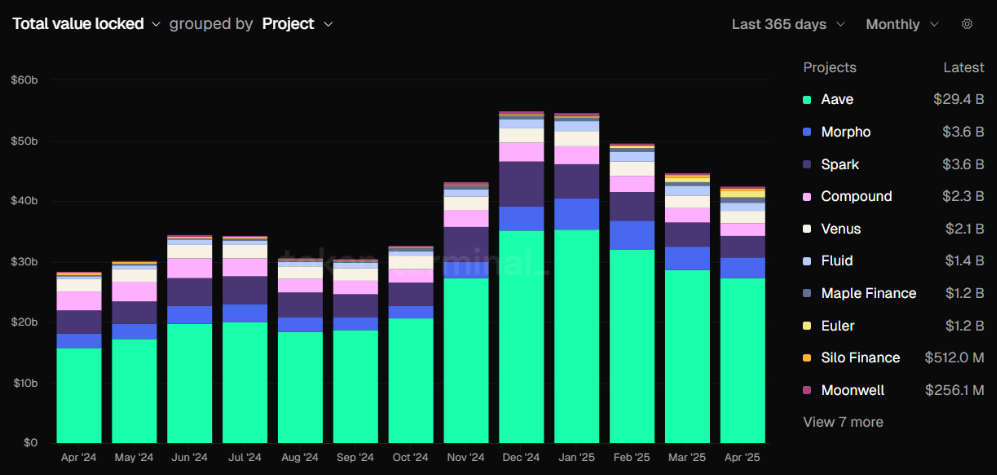
Cette domination structurelle traduit plusieurs dynamiques. D’abord, une architecture multichaîne robuste qui assure une présence sur l’ensemble des réseaux majeurs, attirant des utilisateurs aux profils variés, qu’ils soient individuels ou institutionnels.
Ensuite, l’effet de réseau joue pleinement : plus la liquidité est abondante, plus les utilisateurs sont incités à y déposer leurs actifs pour bénéficier de meilleures conditions de prêt et d’emprunt.
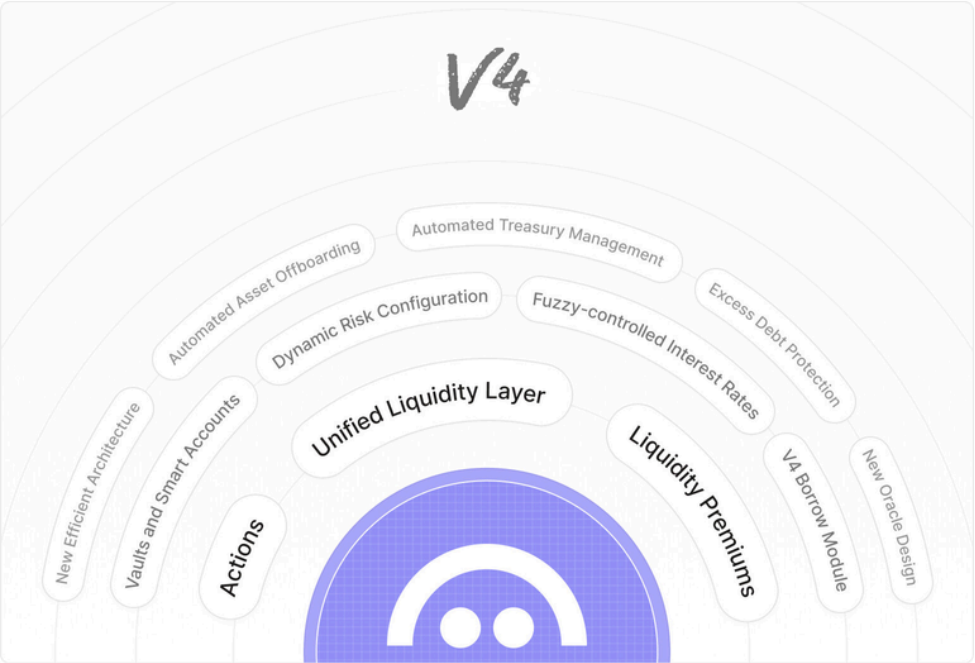
Enfin, la gouvernance et l’innovation continue – notamment avec le déploiement d’Umbrella, du programme de rachat de tokens AAVE, de la tokenisation d’actifs réels (Horizon), ou encore du développement de la V4 – renforcent la crédibilité et la compétitivité d’Aave.
Au-delà des métriques quantitatives, Aave se distingue aussi par la qualité de son exécution et la cohérence stratégique de ses évolutions. Chaque nouvelle fonctionnalité – qu’il s’agisse de l’introduction du stablecoin GHO ou du mode isolé pour intégrer de nouveaux collatéraux – répond à un besoin réel du marché et s’intègre dans une vision long terme. Là où certains concurrents lancent des produits expérimentaux ou dépendants d’incentives artificiels, Aave construit des primitives financières solides, pensées pour durer et s’adapter à l’évolution des usages crypto comme institutionnels.
Enfin, la nature ouverte et modulaire du protocole – renforcée par sa gouvernance active – fait d’Aave une infrastructure programmable à haute valeur d’adossement. De nombreux protocoles DeFi, mais aussi des entreprises du Web3 ou des initiatives RWA, s’appuient sur Aave comme couche de liquidité ou back-end monétaire. En cela, Aave ne se contente pas de dominer un marché : il devient le socle technique sur lequel se développe une nouvelle finance. Une finance dont les bases sont encore en construction, mais dont Aave s’affirme déjà comme l’un des architectes essentiels.
Aave est l’un des rares protocoles où la gouvernance communautaire ne se limite pas à un rôle symbolique. Depuis 2021, la DAO Aave a voté plusieurs dizaines de propositions déterminantes : déploiement sur de nouvelles chaînes, intégration d’actifs, ajustement des paramètres de risque, modifications de tokenomics, etc.
Le token AAVE est au centre de cette gouvernance. Détenir du AAVE, c’est détenir un droit d’influence sur l’évolution de l’infrastructure, avec la possibilité de venir voter sur les propositions de gouvernance, ou de déléguer son pouvoir de vote aux prestataires de service de la DAO.
Mais c’est aussi accéder à des opportunités économiques : staking dans le Safety Module, qui laissera bientôt sa place à un Staking Module, qui permettra aux stakeurs de Aave de profiter d’une partie des revenus du protocole.
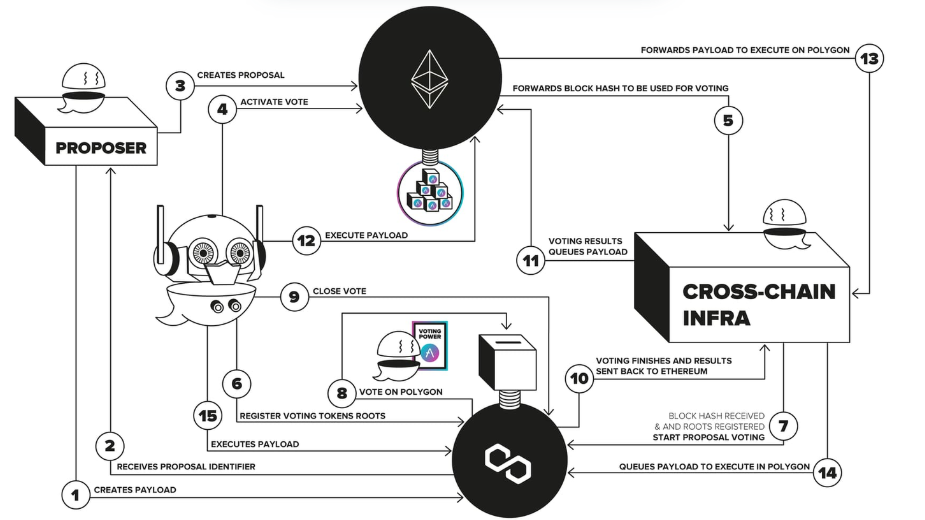
Parmi les prestataires les plus actifs de la DAO Aave, Chaos Labs et Llamarisk jouent un rôle central dans la gestion des risques, en modélisant les paramètres de collatéral et en assurant un suivi continu de la santé économique du protocole. TokenLogic est en charge de la gestion de la trésorerie, avec des propositions régulières sur l’allocation des fonds, les stratégies de swaps, et désormais la mise en œuvre du programme de rachat de tokens AAVE.
De son côté, l’ACI (Aave Chan Initiative) agit comme un moteur stratégique de la gouvernance, en structurant les propositions majeures, comme l’actualisation des Aavenomics par exemple.
Ensemble, ces entités forment une structure décentralisée mais hautement fonctionnelle, à mi-chemin entre un collectif de développeurs et une entreprise étendue, capable de rivaliser avec les plus grandes organisations de la finance traditionnelle.
Le lancement de GHO, en 2023, a représenté une bifurcation majeure dans la trajectoire du protocole.
Mais l’innovation clé ne réside pas dans le design du stablecoin, déjà bien balisé. Elle réside dans le modèle de capture de valeur. Alors que Maker redistribue les intérêts à ses stakers, Aave les redirige intégralement vers la DAO. Ce détail change tout : les intérêts versés par les emprunteurs de GHO deviennent un revenu natif de la gouvernance Aave, qui peut en faire ce qu’elle souhaite : financer des rachats de tokens, alimenter la trésorerie, subventionner des intégrations, ou encore financer des incentives.
GHO n’est pas une simple extension fonctionnelle. C’est un levier économique puissant, qui permet à Aave d’ajouter une couche monétaire à son infrastructure. Et ce levier est encore largement sous-exploité. En avril 2025, GHO représente une supply de 200M$, un chiffre faible au regard du potentiel total de la DeFi. Son extension à d’autres blockchains (déjà sur Polygon, Arbitrum et Base), couplée à une stratégie d’adoption plus agressive (intégration dans les paiements ou applications Web3 comme le réseau social on-chain Lens), pourrait faire exploser cette métrique.

S’il est une chose que les marchés récompensent à long terme, c’est la capacité à croître au-delà de son marché d’origine. Et c’est précisément ce qu’Aave s’apprête à faire : sortir du cadre historique de la DeFi pour devenir une infrastructure monétaire globale, à la croisée de trois tendances majeures — la tokenisation des actifs du monde réel (RWA), l’évolution vers une sécurité économique robuste native et l’unification de la liquidité entre blockchains.
Le projet Horizon est probablement le pivot stratégique le plus ambitieux entrepris par Aave depuis le lancement de V3. Son principe : permettre à des institutions financières réglementées d’interagir avec Aave via une instance permissionnée du protocole, capable d’accueillir des actifs tokenisés comme des fonds monétaires, du crédit ou même de l’immobilier.
Cette initiative répond à un besoin clair : les marchés RWA explosent (+700 % en TVL sur douze mois), mais l’Aave DAO ne capte qu’une fraction marginale de cette valeur. Horizon propose de combler ce vide en alliant infrastructure DeFi et exigences réglementaires, via un modèle de revenus partagé (50/50) entre Aave Labs et la DAO. Cette stratégie permettrait à Aave de générer des revenus non corrélés aux cycles crypto traditionnels, tout en renforçant la pertinence du stablecoin GHO au sein de l’écosystème.
Le plus prometteur ?
La possibilité, pour des institutions qualifiées, d’emprunter du GHO contre collatéral RWA, créant ainsi un pont structurel entre finance traditionnelle et économie on-chain. À mesure que ces usages se normalisent, Aave pourrait devenir l’un des acteurs invisibles majeurs de la tokenisation mondiale, captant des flux massifs de liquidité stable.
Dernière brique de cette expansion : Aave Umbrella, un système de sécurité basé sur le staking des aTokens eux-mêmes (comme aUSDC, aDAI, etc.). À la différence du Safety Module classique où les stakers risquent leur AAVE, Umbrella permet aux utilisateurs de staker directement les tokens utilisés comme collatéraux dans Aave. En cas de dette irrécouvrable, les aTokens stakés peuvent être burnés pour couvrir la perte, de manière automatique et objective.
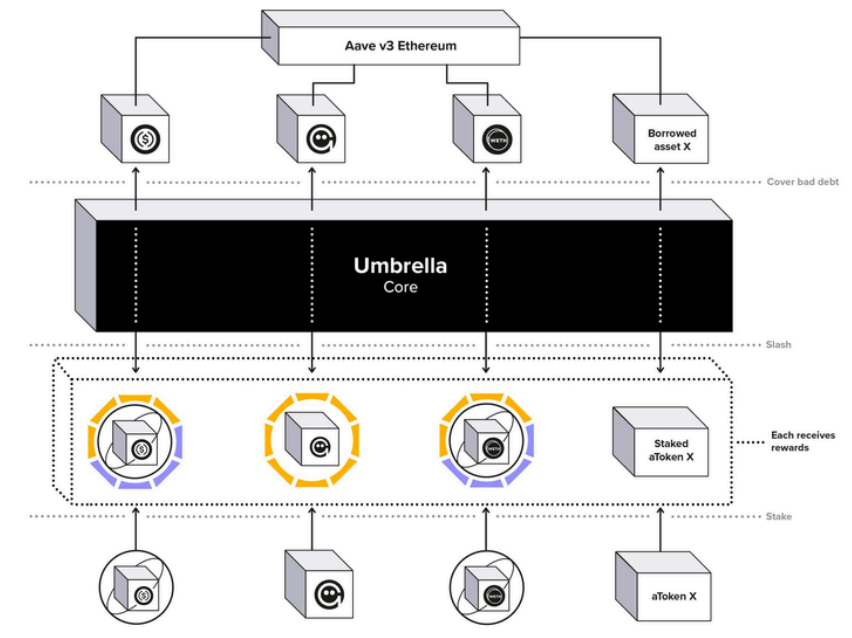
Ce mécanisme change tout :
Umbrella, en permettant une couverture “native” des risques, renforce ainsi la légitimité d’Aave comme infrastructure de prêt crédible aux yeux des institutions — un prérequis pour l’adoption de masse.
Parallèlement, la vision Aave 2030 portée par Aave Labs propose une refonte en profondeur du protocole autour de trois piliers majeurs :
Ces choix techniques ne sont pas anodins : ils permettent à Aave de rester indépendant des blockchains sous-jacentes tout en contrôlant sa distribution, ses frais et ses incentives.
C’est un changement de paradigme : Aave ne se contente plus d’être un protocole intégré à Ethereum. Il devient une infrastructure souveraine, capable de se déployer, de se monétiser et d’évoluer selon ses propres règles.
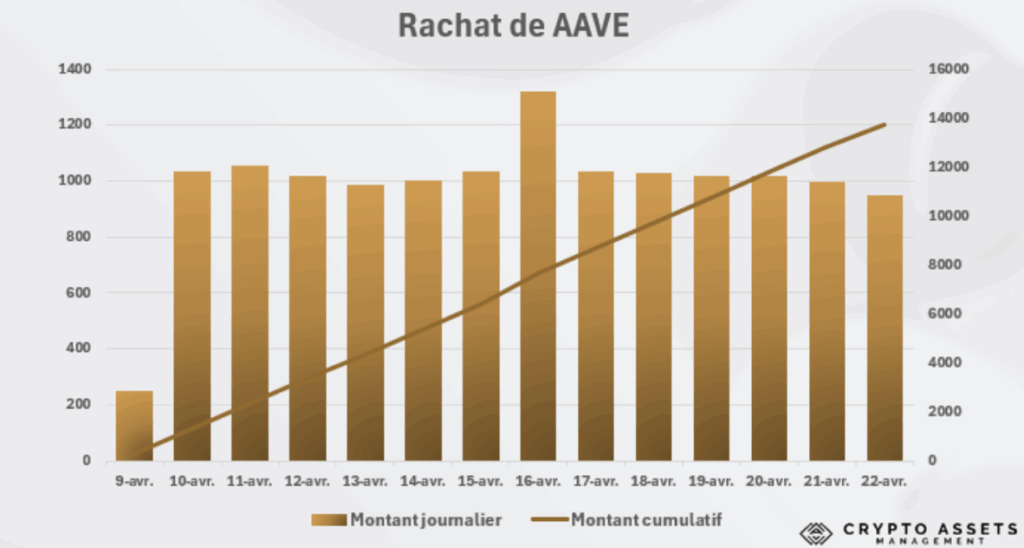
Le 9 avril 2025 marque un tournant dans la gouvernance financière d’Aave, avec le lancement officiel de son programme de rachat et redistribution d’AAVE, dans le cadre de l’implémentation progressive du plan Aavenomics. Ce programme ne se limite pas à une opération de soutien symbolique au token — il matérialise une stratégie macro-économique cohérente de recyclage des revenus excédentaires du protocole au profit des détenteurs de tokens.
Un programme structurel, adossé à des excédents réels
En l’espace de seulement dix jours, 11 285 AAVE ont été rachetés pour une valeur moyenne de 139,25 $, soit un investissement de plus de 1,57 million de dollars, financé en stablecoins via les réserves du protocole. Ce rythme correspond exactement au budget voté dans la gouvernance : 1 million de dollars par semaine pendant six mois, soit une enveloppe prévisionnelle de 26 millions de dollars pour ce premier cycle.
Contrairement à la majorité des programmes de rachat observés dans la DeFi, celui d’Aave n’est pas ponctuel, ni même “opportuniste” (lié à une baisse de prix). Il est conçu comme un mécanisme systémique et soutenable, dimensionné selon le budget réel du protocole, avec des marges de sécurité strictes. Le comité de finance (AFC), nouvellement mandaté, ajuste chaque mois les allocations en fonction des actifs disponibles dans le trésor, avec des achats potentiellement confiés à des market makers tiers.
Au-delà de son impact comptable, ce programme de rachat traduit une évolution fondamentale dans la manière dont la DAO gère ses excédents : passer d’une logique d’accumulation passive à une logique de valorisation active du token AAVE. En redirigeant une partie de ses revenus vers le marché secondaire, Aave introduit un mécanisme de soutien régulier au prix, tout en renforçant la valeur perçue pour ses stakers. Cette politique contribue aussi à aligner encore davantage les intérêts entre les utilisateurs du protocole, les détenteurs du token et la gouvernance, en instaurant un cercle vertueux de création de valeur fondé sur la croissance organique plutôt que sur la dilution.
Une efficacité déjà visible, malgré des conditions neutres
D’un point de vue strictement financier, le programme affichait au 20 avril une performance légèrement négative (–9 200 $, soit –0,59 %), reflet d’un prix d’achat moyen légèrement supérieur au prix courant. Mais cela est sans importance : le but n’est pas le profit spéculatif à court terme. Ce que cette opération accomplit réellement, c’est de :
Chez Crypto Asset Management, nous pensons qu’Aave est l’un des protocoles les plus sous-estimés en termes de fondamentaux dans l’univers crypto. Alors que le marché a souvent privilégié l’effet de nouveauté ou les rendements artificiellement dopés, Aave a poursuivi un cap clair : celui de la robustesse, de la soutenabilité économique et de la construction d’infrastructures durables.
En combinant une position dominante sur le lending, une vision claire autour du stablecoin GHO, des initiatives stratégiques dans la tokenisation (Horizon), la sécurité (Umbrella), et la gouvernance (Aavenomics), le protocole construit une architecture financière complète qui anticipe les besoins des utilisateurs particuliers comme institutionnels.
Le token AAVE incarne cette vision : non seulement un outil de gouvernance, mais aussi et surtout une part du capital d’une plateforme en croissance organique, bien financée, et capable de redistribuer ses revenus à ses détenteurs alignés.
Dans un écosystème en recherche de qualité et de long terme, nous voyons AAVE comme un actif stratégique pour tout investisseur souhaitant s’exposer à la colonne vertébrale de la DeFi de demain.
Si vous souhaitez téléchargez le rapport en PDF :
Mot de l’auteur :
Moi, c’est LittleGhost. Je passe mes journées à étudier la DeFi, à lire des propositions de gouvernance, et à chercher comment construire quelque chose de vraiment durable dans cet écosystème en pleine ébullition.
Si vous souhaitez continuer à suivre mon travail :
📺 YouTube : LittleGhost
🐦 Twitter/X : @0xLittleGhost
Merci sincèrement d’avoir pris le temps de lire ce rapport, et à très bientôt pour de nouvelles analyses.
Chez Crypto Assets Management, nous proposons une gestion sous mandat de portefeuilles d’actifs numériques, personnalisée selon votre profil. Notre stratégie repose sur l’analyse et la gestion des cycles de Bitcoin (historiquement de 4 ans), privilégiant les investissements à long terme, des arbitrages mensuels, et un accent particulier sur la tokenomics.
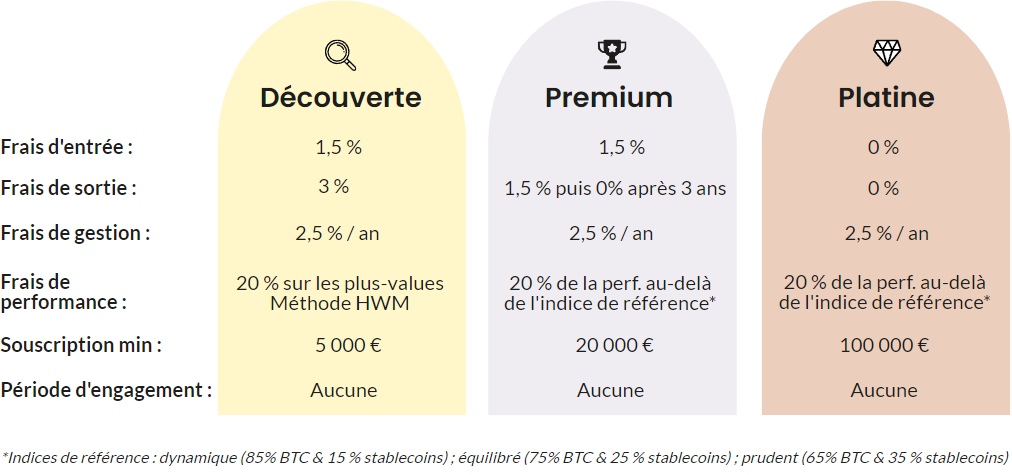
Nous sommes enregistrés auprès de l’AMF au titre des activités d’achat / vente d’actifs numériques contre monnaie ayant cours légal et d’échange d’actifs numériques contre d’autres actifs numériques sous le numéro : E2023-084.
— Avertissement —
Cette lettre n’est pas un conseil en investissement.
Vous êtes seul responsable de vos décisions d’investissement.
L’investissement dans les actifs numériques comporte un risque de perte en capital, partielle ou totale.
Nous ne divulgons pas vos informations personnelles Voir notre Politique de vie privée pour plus d'informations.
