Lettres
17 June 2022
N°14 – Lettre de l’investisseur dans les crypto-actifs
 Écrit par Tristan Goutte
Écrit par Tristan Goutte
Écrit par Tristan Goutte
Bonjour à tous,
L’objectif de cette lettre est de vous informer sur la situation actuelle du marché des crypto-actifs, mais aussi des actualités récentes dans ce domaine. Cette lettre n’est pas un conseil en investissement, mais seulement un partage de mon point de vue personnel.
Ethereum 2.0 plus proche que jamais ? Lors du sommet des développeurs du web 3.0 à Shanghai, Vitalik Buterin en personne a évoqué une arrivée de l’Ethereum 2.0 entre le mois d’août et d’octobre 2022 ! Patience donc… l’Ethereum 2.0 devrait bien arriver en 2022 !
Qu’apporte la mise à jour Ethereum 2.0 ? Pour vous résumer :
Cette mise à jour sera un grand exploit pour l’écosystème crypto et est l’événement le plus attendu de cette année.
La technologie de la blockchain a été inventée en même temps que le Bitcoin en 2009, c’est d’ailleurs le tout premier actif numérique. Depuis, de nombreuses blockchains permettent à de nombreux actifs numériques de fonctionner et de remplir les cas d’usage pour lesquels ils ont été créés. Au-delà de son intérêt spéculatif, la blockchain reste avant tout une technologie qui attire l’attention de manière croissante des professionnels. Une école française a été créée par Jérémy Wauquier : Alyra offre des formations à distance avec un programme flexible afin de devenir un véritable expert de cet écosystème, à travers un parcours rythmé par des professionnels et un certificat de compétences à la clé.
Malgré la baisse du marché des crypto-actifs, le bitcoin est toujours le chouchou des monstres de la finance. PricewaterhouseCoopers (PwC) a publié un rapport sur l’adoption des cryptomonnaies par les fonds spéculatifs traditionnels.
Et 3 statistiques permettent d’avoir un aperçu du niveau d’engagement actuel et futur de ces fonds dans les cryptomonnaies :
Selon ces données, ces fonds, investissant déjà dans les cryptomonnaies, veulent accroître leur exposition, malgré les secousses sur les marchés.
Brésil : un projet de loi déposé pour reconnaître le Bitcoin (BTC) comme moyen de paiement. Le 10 juin dernier, un député brésilien a introduit un projet de loi dont l’objectif est de reconnaître le Bitcoin (BTC) comme un moyen de paiement. Désormais, c’est au législateur brésilien de délibérer sur ce projet loi. Aussi, l’adoption de ce dernier pourrait constituer une étape importante pour le pays qui pourrait rejoindre les pas du Salvador, ou encore de la République centrafricaine.
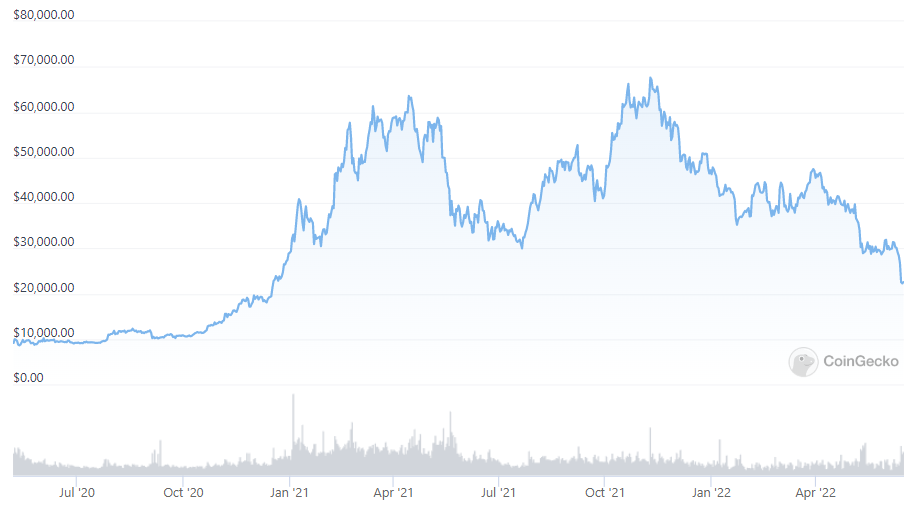
Le cours du Bitcoin à l’heure où j’écris ces lignes est de 21 800 $ (le 16/06/22).
Durant ces dernières semaines, nous avons assisté à la phase finale de la capitulation du marché des crypto-actifs. Pour rappel : les phases de capitulation en bourse sont des phases d’accélération de la baisse, et elles précèdent un rebond, comme une sorte de “purge” avant une normalisation du sentiment et la reprise d’une période haussière. Durant les cycles précédents, après les phases de capitulation, il a fallu plusieurs mois avant que le marché ne se reprenne et ne démarre son nouveau grand cycle.
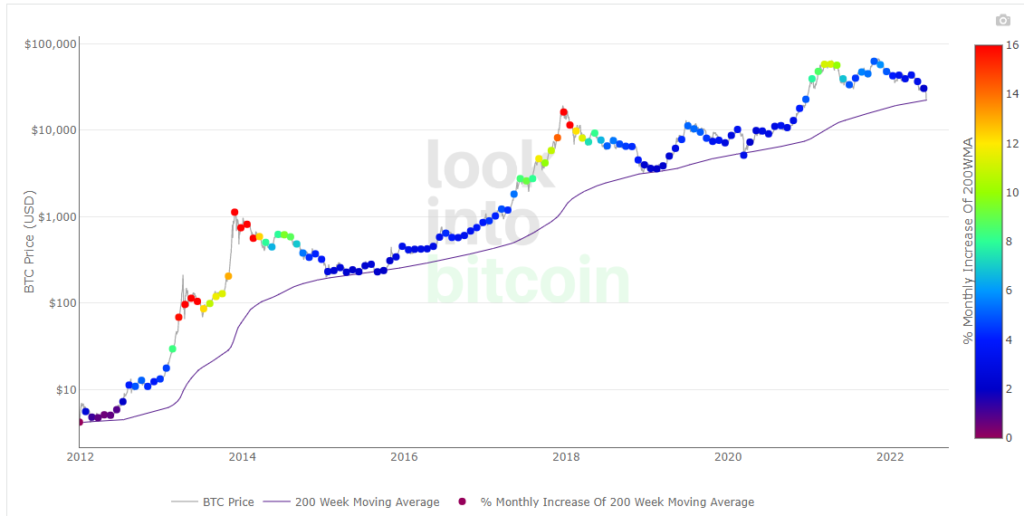
Comme vous pouvez le voir ci-dessous, nous sommes entrés dans la phase profonde et douloureuse du marché baissier. Ces phases ont été atteintes durant le début de l’année 2015, début 2019 et ponctuellement lors de la crise du Covid-19 en mars 2020. Ces phases ont précédemment duré entre 3 et 6 mois avant le début du cycle suivant. Ce sont des opportunités générationnelles d’achat avant le prochain cycle.
Le graphique ci-dessous est une carte thermique de la moyenne mobile sur 200 semaines du prix du Bitcoin en dollars. Dans chacun de ses principaux cycles de marché, le prix de Bitcoin atteint historiquement un creux autour de la moyenne mobile de 200 semaines. Cet indicateur utilise des couleurs basées sur le pourcentage d’augmentation de cette moyenne mobile de 200 semaines. En fonction de l’augmentation mensuelle en % de la moyenne mobile sur 200 semaines, une couleur est attribuée au tableau des prix.
Afin que le début du nouveau cycle puisse démarrer, il faudra que les tentions géopolitiques et inflationnistes dans le monde se stabilisent car les crypto-actifs sont bien reliés au monde économique actuel.
Le marché des crypto-actifs n’est pas le seul à être en forte baisse, tous les indices boursiers sont en forte baisse notamment dans le secteur des technologies. Une raison à cela : les banques centrales augmentent leurs taux d’intérêt et réduisent le quantitative easing (QE). Pour résumer : les banques centrales arrêtent d’imprimer de l’argent à cause de l’augmentation de l’inflation (perte de pouvoir d’achat par le biais d’une augmentation généralisée des prix). Il y a donc une crise de liquidité et un dégonflement de tous les marchés irrigués par cette impression monétaire.
Néanmoins, les taux d’intérêts que dirigent les banques centrales (FED, BCE…) des pays riches et surendettés (comme la France à 150% du PIB) ne peuvent pas trop augmenter, car si ces taux d’intérêts montent, cela augmente les intérêts que doivent payer ces pays sur leur dette.
En conséquence, les banques centrales se sont mises toutes seules dans une situation difficile avec deux choix :
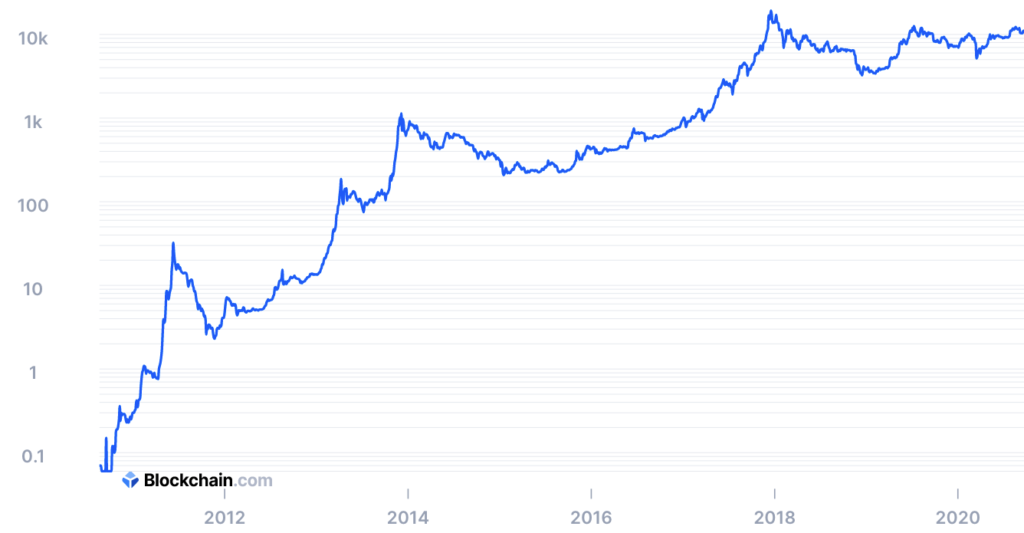
Plusieurs éléments nous font penser que ce sera le deuxième choix qui sera sélectionné. En attendant sur le long terme, les crypto-actifs ne seront pas impactés par l’inflation, notamment le Bitcoin avec sa quantité limitée à 21 millions de jetons. Il continuera à se construire comme une réserve de valeur dans le temps et sur le long terme comme vous pouvez le remarquer sur le graphique de la moyenne mobile sur 200 semaines que je vous ai montré précédemment ! À court terme, c’est un actif risqué, volatile et qui est fortement impacté par la liquidité dans les marchés, c’est pour cette raison qu’il est ponctuellement corrélé aux indices boursiers qui sont, eux aussi, impactés par les liquidités injectées par les banques centrales.
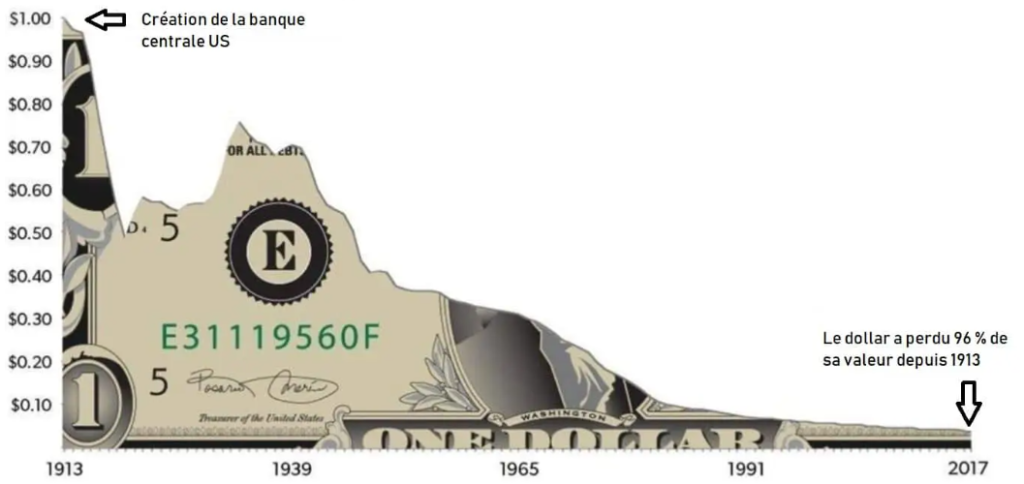
Les monnaies FIAT (euros, dollars…) sont des monnaies non-volatiles à court terme mais elles perdent de la valeur à long terme. Certains actifs numériques comme le Bitcoin (BTC) et d’autres (ETH, BNB…) sont très volatiles à court terme, mais conservent et parfois même augmentent leur valeur à long terme.
Les deux images ci-dessous permettent de facilement visualiser ce que je souhaite vous expliquer à propos du pouvoir d’achat des monnaies FIAT (dollars, euro). Évidemment, les actifs numériques sont plus récents et ils leur restent de nombreux « test » et périodes à traverser pour valider ces affirmations au travers du temps. C’est d’ailleurs ce qui fait que c’est un investissement : si cela était une certitude, il n’y aurait que très peu de volatilité, comme pour l’or, qui a déjà fait ses preuves sur de très longues périodes.
Si vous avez des questions, des remarques ou si vous souhaitez en savoir plus sur notre service, n’hésitez pas à nous contacter : crypto.assets.manage@gmail.com
— Avertissement —
Ceci n’est pas un conseil en investissement, personne ne peut prédire l’avenir.
Vous êtes seul responsable de vos propres décisions d’investissement.
Nous ne sommes pas responsables des pertes suite à une décision prise sur la base des informations de cette lettre.
Nous ne divulgons pas vos informations personnelles Voir notre Politique de vie privée pour plus d'informations.